Performance Showdown: Generative AI & Reasoning Models on GPUs vs. Apple Silicon (M-Series)
An in-depth analysis of how Generative AI and advanced Reasoning Models perform across traditional NVIDIA GPUs compared to Apple's robust M-Series (MacBook Pro & Max) architectures.

Table of Contents
The Shift in AI Compute Architectures
The landscape of artificial intelligence is no longer restricted to massive server farms housing thousands of power-hungry GPUs. With the rapid evolution of efficient architectures, edge devices and premium laptops are now capable of running complex Generative AI and deep reasoning models locally. But how does the performance truly stack up?
In this technical deep dive, we compare the execution, latency, and throughput of modern AI models on traditional discrete computing units (like NVIDIA's RTX and Data Center GPUs) versus Apple's unified memory architecture, specifically focusing on the MacBook Pro equipped with M-Series Max chips.
Understanding the Bottlenecks: Compute vs. Memory Bandwidth
When running large language models (LLMs) or complex reasoning networks (like chain-of-thought models), the bottleneck often isn't the raw compute power (TFLOPs), but rather the Memory Bandwidth. The faster the processor can read the model weights from memory into the arithmetic logic units (ALUs), the faster the token generation.
This is a crucial insight that most benchmarks overlook. A GPU with 1,000 TFLOPs of theoretical compute but limited memory bandwidth will consistently lose to a processor with half the compute but 2× the memory bandwidth when running auto-regressive generation tasks.
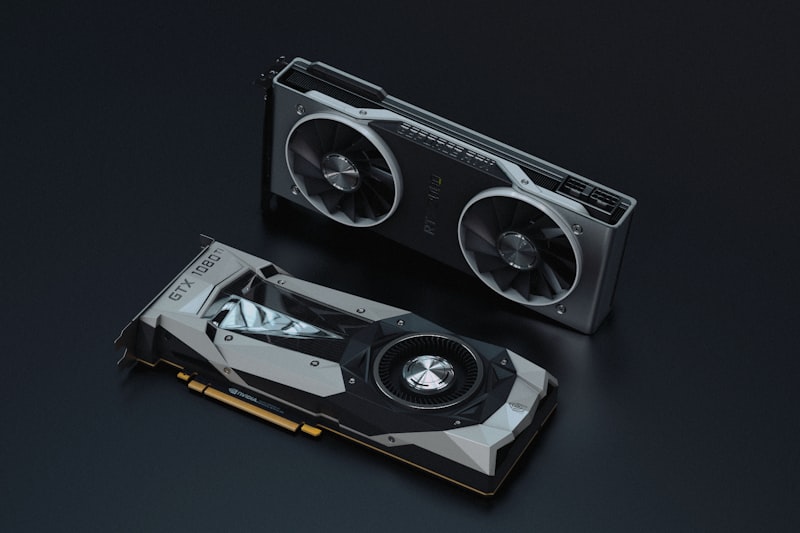
Traditional GPUs: The Raw Powerhouse
NVIDIA's architectures (Ada Lovelace, Hopper) remain the undisputed kings of raw compute. Devices like the RTX 4090 or the enterprise H100 excel in high-batch-size processing and massive parallel training workloads. They utilize ultra-fast GDDR6X or HBM3 memory.
- Pros: Unmatched parallel processing, ubiquitous software support (CUDA), ideal for massive fine-tuning and batch inference.
- Cons: High power consumption (300–700W), thermal throttling under sustained load, and hard VRAM limits (24GB on consumer cards) that restrict local deployment of 70B+ parameter models without heavy quantization.
- Best For: Training foundational models, high-volume inference servers, research labs with dedicated infrastructure.
Apple Silicon (M-Series Max): The Architecture of Efficiency
Apple disrupted the AI hardware space not by building faster GPUs, but by rethinking the memory pipeline. The MacBook Pro powered by chips like the M3 Max or M4 Max utilizes a Unified Memory Architecture (UMA).
This means the CPU, GPU, and Neural Engine all share a massive pool of RAM (up to 128GB on Max configurations). For Generative AI, this is a game-changer. A researcher can load a massive LLM (Mixtral 8x7B or Llama 3 70B) natively into the unified memory of a laptop—something impossible on a consumer NVIDIA GPU without extreme quantization or complicated multiple-device sharding.

Performance Benchmarks: Head-to-Head Comparison
1. Standard LLM Generation (Llama 3 8B)
For smaller models, consumer GPUs (like the RTX 4080) easily outpace the MacBook Pro. The high memory clock speeds of discrete GPUs allow for blazing-fast token generation rates (often exceeding 100 tokens/sec). The M-Series Max chips are extremely competent, often delivering highly usable rates of 40–60 tokens/sec, but they don't win raw speed races here.
2. Heavy Reasoning and Long Context (128K+)
Reasoning models require deeper context windows and complex state management. When context sizes explode to 128K tokens, VRAM capacity becomes the primary constraint. Here, the MacBook Pro's unified memory shines. While an RTX card might hit an Out-Of-Memory (OOM) error trying to process a massive analytical query, the Mac allocates its 128GB of RAM dynamically, completing the reasoning task without crashing, albeit at a steady, moderate pace.
3. Total Cost of Operation
A MacBook Pro M4 Max with 128GB RAM costs approximately $3,999–$6,999. Compare this to building a comparable local AI server: an NVIDIA RTX 4090 alone costs $1,599+, plus a workstation chassis, power supply, NVMe storage, and 64GB of separate system RAM often totaling $3,500–$5,000 with significantly higher monthly electricity costs (up to $80–$120/month at heavy use).
The Verdict
If your goal is raw speed, massive batch sizes, or training foundational models from scratch, traditional datacenter or high-end consumer GPUs are irreplaceable.
However, if you are an AI developer, agency, or researcher looking to experiment with massive parameter models locally, conduct complex multi-step reasoning tasks without cloud API costs, or build AI applications on the go, the MacBook Pro with M-Series Max chips represents an unparalleled, power-efficient local inference engine.
"Apple's Unified Memory turns premium laptops into portable datacenters for Local AI inference, fundamentally shifting how developers build and test large reasoning models."

